.scrollbox { height:400px width:800px overflow:auto; }

Sep 1, 2013

Mike Lacche Boxing Magazine: September, 2013

Mike Lacche Boxing welcomes you, one of the more than unique 2,194 readers in 10 countries.

September is an important month in the family history of S/Sgt. Michael "Mike" Anthony Lacche (La'KAY), United States Army Welterweight Base Boxing Champion, Fort Kamehameha, Hawaii, 1942.

September 10: Nick Lacche (brother, 125th birth anniversary is 2035)

September 19: Vildo Cerasoli (brother-in-law, family patriarch), birthday anniversary (centennial is 2016)


September 21: Mike Lacche enlistment anniversary in United States Army (1939).

When reflecting on his boxing career, Mike Lacche stressed the importance of boxing being a thinking sport; Mike compared boxing with chess except "when the king fell someone would get really hurt."

All of the Army athletes competing for the title were in good shape -- eight hours a day PT training in courses that most civilian athletes today would gladly sit out or only attempt one portion.

Part of Mike's training involved innovative uses of sand -- Fort Kamehameha was a short run from the Pacific Ocean and sandy beaches offered a good venue to train legs and core. Mike also practiced punching into sand to harden and develop muscles that his opponents may otherwise ignore.


Mike was a confident boxer but always approached each bout with the assumption his opponents were bigger, stronger and better. That 'me versus the world' attitude kept Mike alive during his 1942 title run, as well as, throughout World War II.
 

Aug 4, 2013

Mike Lacche Boxing Magazine: August, 2013

We are six months away from the centennial celebration of the birth of /Sgt. Michael "Mike" Anthony Lacche (La'KAY), United States Army Welterweight Base Boxing Champion, Fort Kamehameha, Hawaii, 1942.

It's been a long road and we salute all veterans past and still with us for their honor and bravery in defending this great country.

Memories of Mike


wikipedia.org
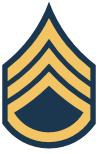
Mike Lacche was proud of becoming United States Army Welterweight Base Boxing Champion, Fort Kamehameha, Hawaii, 1942 and also earning the rank of Staff Sergeant during his military career.

Like many Americans who grew up fast without much money, the Armed Forces gave a sense of honor and community.

A Staff Sergeant in the U.S. Army is an E6 ranking, non-commissioned officers who served as squad leaders. That meant that Mike had to lead a group of young men in a global war; Mike believed in leading by example.

Boxing became both a venue to lead by example, as well as, an escape for Mike to throw his full focus on a goal that only he could be responsible for. Mike took pride in the long history of Army Base athletics.

Jun 30, 2013

Mike Lacche Boxing Magazine: July, 2013

Mike Lacche Boxing thanks all Servicemen and Servicewomen, their families, loved ones and their communities for the greatest support, sacrifice and dedication any American can make to keep this country safe and free. On this month, as we all celebrate another Independence Day, let us remember those who put deeds above words, sacrifice about personal safety, actions about comfort.

Thank you!

This month in family history, Mike Lacche Boxing: July 27: Restoration of family name (25th anniversary 2019).


About Mike Lacche Boxing
 
S/Sgt. Michael "Mike" Anthony Lacche (La'Kay) 1914 -1989 represented the fighting spirit that our service men and women take every day when defending our freedom. In coming months, we look forward to sharing more about Mike's boxing career. We are preparing for Mike's 100th anniversary on February 13, 2014 which will include a limited edition trading card.
 
Joseph "Joe" N. Ermer 1918 - 2012 was a wonderful role model, artist, friend and true competitor. Joe Ermer was a WWII Veteran with the United States Navy and spent every day after his military service helping those around him. Joe was a passionate billiards player and always brought the best out of everyone.

Jun 2, 2013

Mike Lacche Boxing Magazine: June, 2013

Mike Lacche Boxing salutes the 2012-2013 Army Black Knights baseball team which won their second consecutive Patriot League pennant and went on to be one of 64 teams to make the NCAA Division I playoffs.

Navy is sending both its men's and women's rowing teams to the National Championships and we wish them well too.

Our site readership is nearing 2,000 and we thank everyone for your on-going support.

This month in family history, Mike Lacche Boxing June 13: Nina Cerasoli Lacche (wife), birthday anniversary (centennial is 2020)


Memories of Mike: Mike and brother Nick Lacche lost their father young; and like many in the same situation had to grow up fast. Mike left public school early and took on jobs to help do his part to support the family.

Some evenings, when he had a pocket of a few hours of free time, Mike would train at the old Berwick YMCA building, which was constructed in 1906. There he and friend were given the sports coaching that they missed out on because they could no longer attend school.

The Berwick YMCA had two stories dedicated to different sports and wellness, with the third floor for administrative offices. The building was located on a corner lot in a convenient part of town so that young people had somewhere constructive to go.

Mike was part of a boxing class/team that met Tuesday and Thursday evenings, where dedicated coaches would teach the young men the fundamentals of the sport; Mike learning like a sponge, punched with the force of a heavyweight and had no fear taking on bigger opponents. In short, the seeds of a future champion were planted.

Apr 30, 2013

Mike Lacche Boxing Magazine: May, 2013

S/Sgt. Michael Anthony Lacche
In honor of Memorial Day: May 27, 2013.

Mike Lacche Boxing joins the community in honoring all the brave, dedicated, patriotic Americans who throughout their lifetimes of this great country put the lives of the country above their personal life and safety. Thank you for enabling millions of Americans to enjoy life, liberty and the pursuit of happiness.

Joseph "Joe" N. Ermer was part of a crew that for years would take part in invasions, pick up troops, and get the badly wounded back to the hospital ship. Click here for audio version.

"We had four doctors and one dentist on board during invasions; we had three operating theatres and would usually take on board about 400 of the worst casualties. Needles to say, we had to bury some at sea - those who didn't make it.


Joseph "Joe" N, Ermer
Joseph "Joe" N. Ermer, WWII
At first my GQ station was in Damage Control, but I tried as a gunner on the 20 mm and I did quite well. They sent me to Gunnery School at Espiritu Santo in New Hebrides. After that, my GQ station was gunner on the 20 mm on top of Carpenter Shop near the fantail. I really liked the gun. It was the largest one-man gun, although I had a sightsetter and a loader. The gunner was strapped in and could fire in any direction, even directly overhead.

When we would run through a drum of shells, the loader would quickly change drums. The sightsetter would be given the range from fire control and would set it on the gunsight. The gunsight was electronic and would show the target in the middle of a lighted reticule. The site would actually compute the lead by figuring the travel and range together. However, when planes were too close, we would fire by instinct. There wouldn't be any point in using the sight.


The whole mount would be raised or lowered, like a barber chair, to fit the height of the gunner. Since I was tall, I'd have it up pretty high, which enabled me to fire down at the water. That was handy when the torpedo planes came in.

If the gun got too hot, it could jam. We had an extra barrel in the tube welded to the side of the gun tube. It was the job of the loader and sightsetter to put on asbestos gloves and twist out the six-foot-long barrel and replace it.

Things got difficult when the Japanese started using Kamikaze tactics. Sometimes there were as many as 300 planes attacking the fleet at once. During the invasion of Leyte, in the Philippines, we got to do some mine clearing. We were one of the lead APQ's and we streamed paravanes. They looked like underwater kites from the bow. We had to maintain a steady speeds to have them run properly. If the cable encountered a mine mooring, it would slide to the paravane and cut loose. The mine would come to the surface and we had sharp-shooters to blow them up.

We made quite a few landings in the Philippines. In one of them, we were involved in a night battle with a Japanese Destroyer off Manila Bay. During the Leyte Invasion, we were almost caught by the Japanese. The home fleet came down from the north and the East Indies fleet came from the southwest. They were after the transports off Leyre. That is the famous episode where they baited Halsey out with a flint in the north. He bit and rushed away, leaving the invasion fleet with just some escort carriers and a couple of cruisers a destroyer flotilla and some torpedo boats (JFK comes to mind).